

Table of Contents
- Is High-End Skincare Really Better? What Price Actually Buys You
- Expensive Skincare vs. Drugstore Skincare: Where the Real Differences Sit
- Skincare Ingredients for Aging Skin That Are Worth Paying For
- How to Compare Skincare Products Without Getting Lost in the Label
- A Minimalist Skincare Routine for Aging Skin That Earns Its Place
- When to Splurge and When to Save on Skincare
- Frequently Asked Questions
- The Bottom Line: Thoughtful Skincare Is About More Than Price
Last Updated: October 17, 2026
Is High-End Skincare Really Better? An Honest Guide
Is expensive skincare really worth it? It's a question many of us ask when comparing a $20 moisturizer with one costing $75 or more.
The answer isn't as simple as the price tag. While premium skincare can offer advantages in formulation, texture, packaging, and the overall experience, a higher price doesn't automatically guarantee better results.
What matters most is choosing thoughtfully formulated products that address your skin's needs—and that you'll enjoy using consistently.
Here's how to recognize genuine value in skincare, understand when spending more makes sense, and build a routine that delivers more than just a luxurious experience.
Is High-End Skincare Really Better? What Price Actually Buys You
High-end skincare isn't automatically better than a well-chosen affordable product. However, a higher price can sometimes reflect meaningful differences in formulation, ingredient quality, product development, packaging, and the overall experience of using a product.
A beautifully packaged cream may feel luxurious, but its effectiveness ultimately depends on what's inside and how the formula performs on your skin.
Likewise, an affordable product containing well-researched ingredients may deliver excellent results without the premium price.
The key is understanding what you're actually paying for.
Key Takeaway
Price and performance aren't the same thing. Evaluate skincare by its formulation, suitability for your skin, and the results you experience over time—not simply by what it costs.
Expensive Skincare vs. Drugstore Skincare: Where the Real Differences Sit
The difference between expensive skincare and drugstore skincare isn't necessarily found in the ingredients themselves.
Both categories may contain familiar ingredients such as hyaluronic acid, peptides, antioxidants, and botanical extracts.
What can distinguish one product from another is how those ingredients are combined, the stability of the finished formula, its texture, and how comfortably it fits into a daily skincare routine.
Ingredient quality and concentration
Ingredient quality involves factors such as purity, consistency, and stability. Concentration refers to how much of a particular ingredient is included in a formula.
But more isn't always better.
Some skincare ingredients are effective at relatively low concentrations, while others may cause irritation when used too aggressively.
Ingredient lists offer useful clues about a product's formulation, but they don't tell the whole story.
Ingredients are generally listed in descending order of concentration, with certain exceptions for ingredients present at 1% or less. An ingredient appearing near the end of the list isn't necessarily ineffective.
Its benefits depend on the amount used, the overall formulation, and how it performs on the skin.
Formulation, texture, and how a product feels
Formulation is the process of combining ingredients into a finished product that is stable, comfortable, and appropriate for its intended use.
A well-formulated moisturizer should spread comfortably, absorb appropriately, and leave skin feeling cared for rather than excessively greasy or tight.
Texture matters, too.
A product that feels wonderful on your skin is one you're more likely to use consistently.
And consistency is one of the most important elements of any successful skincare routine.
Premium skincare may offer a more refined sensory experience, but that doesn't mean every expensive product will outperform a more affordable alternative.
The best product is one that combines thoughtful formulation with a comfortable, enjoyable experience.
Skincare Ingredients for Aging Skin That Are Worth Paying For
As skin matures, its needs may change.
Dryness, changes in texture, uneven tone, and the appearance of fine lines can become more noticeable.
Rather than filling your bathroom cabinet with countless products, focus on ingredients that address your individual concerns.
For many people, the most useful skincare ingredients support hydration, help maintain the skin's moisture barrier, provide antioxidant benefits, or improve the appearance of uneven texture.
Ingredients worth knowing
Hyaluronic acid
Hyaluronic acid is valued for its ability to attract and retain moisture.
It can help skin appear plumper and smoother by improving hydration and temporarily softening the appearance of fine lines associated with dryness.
Different molecular forms of hyaluronic acid may be used in formulations to support hydration at the skin's surface and within its upper layers.
Peptides
Peptides are short chains of amino acids used in skincare formulations for a variety of purposes.
Certain peptides have been studied for their potential to improve the appearance of skin firmness and fine lines.
Their effectiveness depends on the specific peptide, its concentration, and the finished formulation.
Antioxidants
Antioxidants such as vitamins C and E help protect against oxidative stress associated with environmental exposure.
Vitamin C is also used in products intended to improve the appearance of uneven skin tone.
Some forms of vitamin C are sensitive to light and air, making formulation and packaging important considerations.
Botanical ingredients
Plant-derived ingredients can contribute hydration, nourishment, antioxidant properties, and other benefits depending on their composition.
Botanical ingredients aren't automatically gentler or more effective simply because they're derived from plants.
What matters is how they're selected, formulated, and tolerated by the skin.
Understanding botanical alternatives to retinol
Traditional retinoids are well-established skincare ingredients, but some people experience dryness or irritation when using them.
Botanical alternatives offer another approach to caring for mature skin, although they shouldn't be assumed to produce the same results as retinoids.
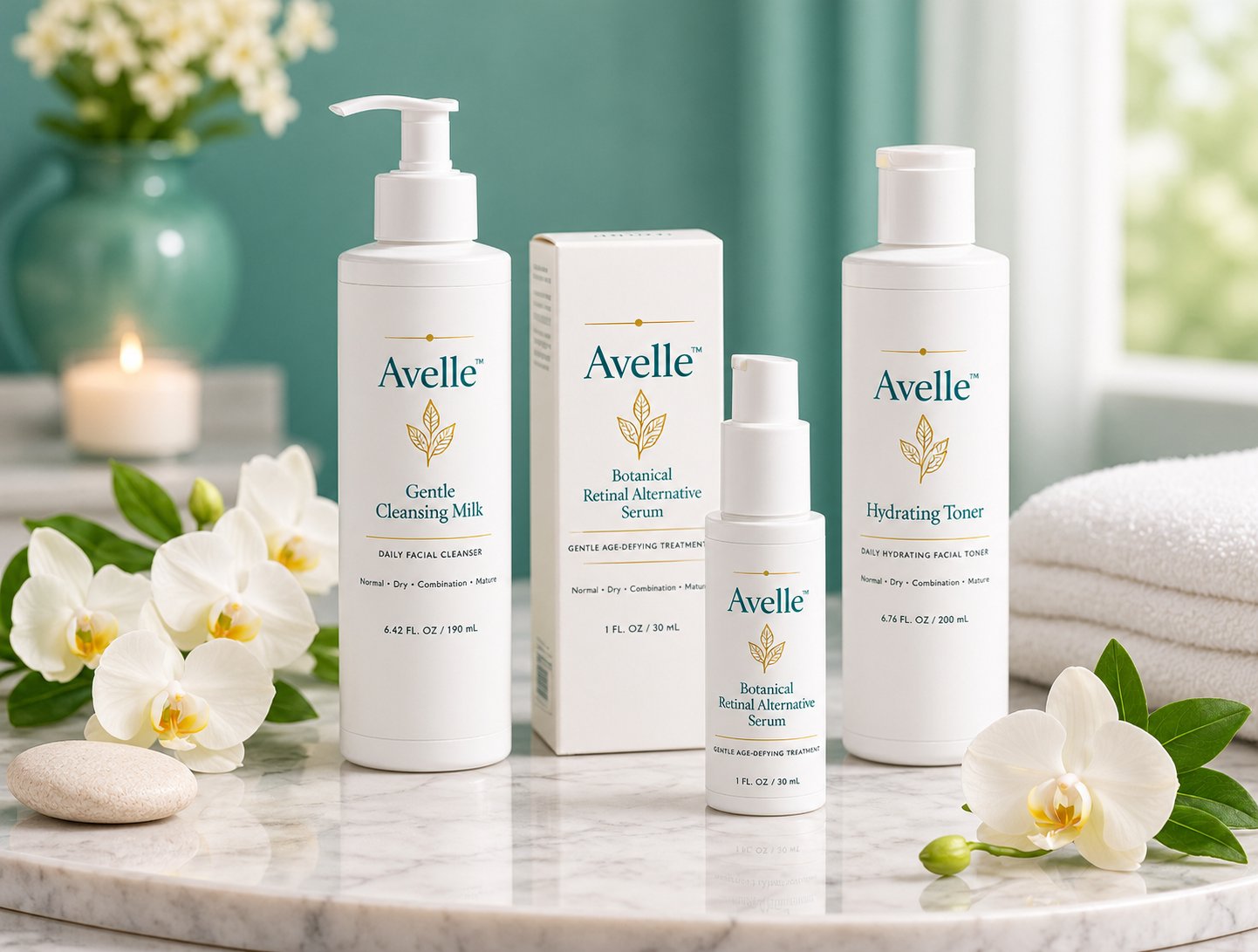
Avelle™ Botanical Retinol Alternative Serum features Bidens Pilosa alongside hyaluronic acid and nourishing botanical ingredients, including jojoba and antioxidant-rich sea buckthorn.
The formula is designed to support hydration and smoother-looking skin while complementing a gentle daily skincare ritual.
[Keep existing Avelle™ Botanical Retinol Alternative Serum product photograph here.]
Caption: Avelle™ Botanical Retinol Alternative Serum
Concentration, stability, and delivery: the three things price rarely tells you
An ingredient appearing on a label doesn't automatically tell you how well the finished product will perform.
Three considerations are especially important:
Concentration: How much of an ingredient is included in the formula. The ideal concentration varies by ingredient and intended benefit.
Stability: How well an ingredient and the finished formula maintain their intended properties over time.
Delivery: How the formulation makes an ingredient available to the skin, where appropriate for its intended action.
These factors help explain why two products featuring similar ingredients may perform differently.
They also demonstrate why a thoughtfully developed formulation can be worth paying more for.
Realistic timelines: what to expect and when
Skincare results rarely happen overnight.
Hydrating products may make skin feel softer and more comfortable relatively quickly.
Improvements in the appearance of uneven tone, fine lines, or texture may require several weeks or months of consistent use, depending on the ingredients and individual skin characteristics.
Introducing products gradually also makes it easier to recognize which ones are working well for you.
Pro Tip
When introducing a new treatment product, begin gradually according to its directions. Give your skin time to adjust, and avoid introducing several potentially irritating ingredients simultaneously.
How to Compare Skincare Products Without Getting Lost in the Label
Comparing skincare products doesn't require a chemistry degree.
Instead, focus on a few practical questions that help distinguish genuine value from marketing promises.
Five things to consider
- Review the ingredient list. Look for ingredients suited to your skin's needs rather than choosing products solely because they feature a fashionable active.
- Consider the overall formulation. Ingredients work together, and the finished product matters more than any single ingredient.
- Examine the packaging. Certain ingredients benefit from protection against light, air, or contamination. The ideal packaging depends on the formula.
- Compare product sizes. A product that appears less expensive may contain significantly less product.
- Think about cost per use. A product that lasts several months may represent better value than one that needs frequent replacement.
Cost per use and long-term value
The initial price of a skincare product doesn't always reflect its true value.
A larger container that lasts several months may cost less per application than a smaller product with a lower purchase price.
To estimate cost per use, divide the product's price by the approximate number of applications it provides.
Product |
Size |
Illustrative applications |
Estimated cost per use |
|---|---|---|---|
Serum |
30 mL |
60 |
Price ÷ 60 |
Day Cream |
50 mL |
90 |
Price ÷ 90 |
Night Cream |
50 mL |
90 |
Price ÷ 90 |
These application counts are illustrative estimates, not guaranteed yields. Actual usage varies depending on the amount applied and individual preferences.
Cost is only part of the equation.
A product that feels comfortable, fits your routine, and encourages consistent use may provide greater personal value than one you rarely reach for.
Ultimately, the best skincare investment is a product you'll use and enjoy.
A Minimalist Skincare Routine for Aging Skin That Earns Its Place
A thoughtful skincare routine doesn't have to be complicated.
In fact, a smaller collection of carefully selected products can often make daily skincare more manageable and enjoyable.
The goal isn't to use as many products as possible. It's to create a consistent ritual that supports your skin's needs.
[Keep existing photograph of mature woman applying skincare here.]
Caption: A simple, consistent skincare ritual can make everyday care feel effortless.
The four essentials of a simple skincare routine
1. Cleanse gently
Begin with a cleanser that removes impurities without leaving skin feeling stripped or uncomfortable.
Choose a texture suited to your skin type and preferences.
2. Treat with a targeted serum
A serum can provide focused care for concerns such as dehydration, uneven texture, or the appearance of fine lines.
Choose one that addresses your priorities rather than layering multiple products simply because they're popular.
3. Moisturize
Moisturizer helps maintain hydration and support the skin's moisture barrier.
A comfortable daytime formula may work well under sunscreen and makeup, while a richer cream may be preferable in the evening.
4. Protect your skin
Daily broad-spectrum sunscreen with SPF 30 or higher is one of the most important steps in protecting skin against UV-related premature aging.
Apply it as the final skincare step in your morning routine, before makeup.
Optional additions to your ritual
An eye cream can provide targeted moisturizing care for the delicate skin around the eyes.
A gentle exfoliator may also help improve the appearance of uneven surface texture when used appropriately.
Neither requires turning your skincare routine into an elaborate process.
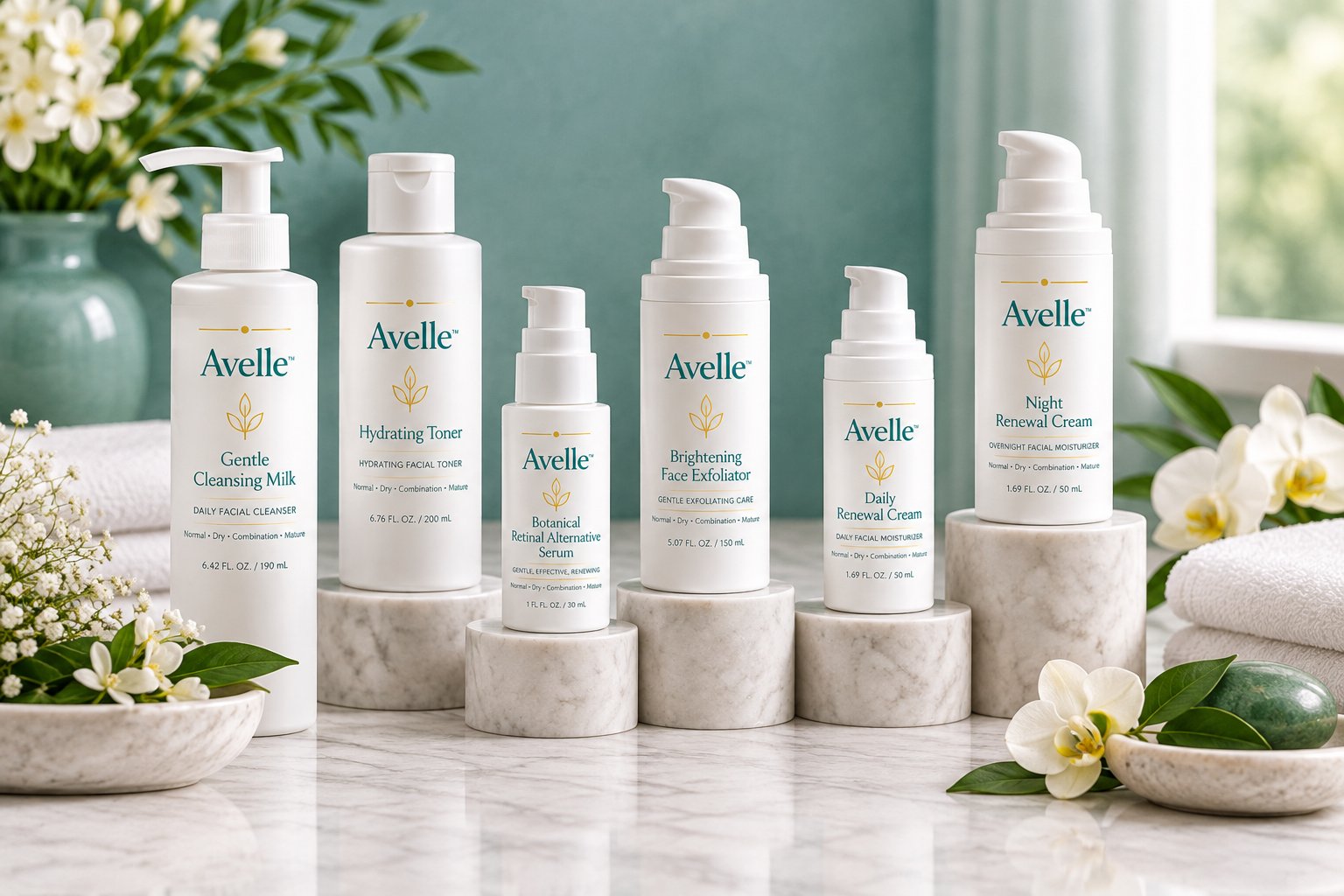
The Avelle™ collection, including the Botanical Retinol Alternative Serum, Peptide Age-Defying Eye Cream, and Daily and Night Renewal Creams, is designed to help create a coordinated skincare ritual without unnecessary complexity.
[Keep existing Avelle™ Daily Renewal Cream product photograph here.]
Caption: Avelle™ Daily Renewal Cream
Watch Out
Introducing several new skincare products at once can make it difficult to identify what is helping your skin and what may be causing irritation.
Add new products gradually and give your skin time to respond.
When to Splurge and When to Save on Skincare
Not every skincare product requires a premium price.
Knowing when to invest more—and when a simpler product may be sufficient—can help you build a routine that feels worthwhile.
The most useful approach is to evaluate products individually rather than assuming expensive always means better.
A product-by-product decision framework
Before deciding whether a premium product is worth the investment, consider three questions.
How long does the product remain on my skin?
Leave-on products, including serums and moisturizers, have more time in contact with the skin than rinse-off products.
However, contact time alone doesn't determine effectiveness. Cleansers, for example, can still have a significant impact on skin comfort and the moisture barrier.
Does the formulation require special consideration?
Some ingredients are particularly sensitive to environmental conditions or require careful formulation to maintain stability.
In these situations, formulation expertise and appropriate packaging may contribute to product quality.
Will I enjoy using it consistently?
The experience of using skincare matters.
A moisturizer that feels comfortable and layers beautifully beneath sunscreen may become a welcome part of your daily routine.
A product you dislike using—even an expensive one—offers little value sitting unused on a shelf.
Where spending more may make sense
Targeted treatment serums
Serums often contain ingredients selected to address specific concerns.
A thoughtfully formulated serum may justify a higher price when its ingredients, texture, and performance meet your needs.
Moisturizers and night creams
A moisturizer that supports skin comfort and hydration is a valuable part of a routine.
A premium formula may be worth considering when its texture, moisturizing performance, and overall experience make it especially enjoyable to use.
Eye creams
Dedicated eye creams can provide targeted moisturizing care and may be formulated with textures suited to the eye area.
However, they're optional rather than essential for everyone, and a higher price doesn't guarantee superior results.
Where you may be able to save
Cleansers
A cleanser doesn't need to be expensive to clean effectively.
However, gentleness, texture, and how your skin feels after cleansing can make a meaningful difference in the daily experience.
Toners
A simple hydrating toner can complement a skincare routine without requiring a premium price.
Still, a thoughtfully formulated toner that feels comfortable and works well with your other products may be worth considering.
Skincare accessories
Cotton pads, washcloths, and other basic tools generally don't require a luxury price to perform their intended function.
The guiding principle is simple: spend thoughtfully on the products that make a meaningful difference to your skin and your enjoyment of your routine.
Skin-type and concern-specific guidance
Different skin types have different priorities.
Acne-prone skin
Choose lightweight, non-irritating products that address your concerns without unnecessarily overwhelming the skin.
A higher price doesn't guarantee better suitability.
Sensitive skin
Look for formulas that your skin tolerates comfortably.
Fragrance and certain other ingredients may trigger irritation in some individuals. Introduce products gradually and consider patch testing.
Dry or mature skin
Hydration and moisture-barrier support are often especially important.
Choose moisturizers and serums that leave skin feeling comfortable and cared for.
Uneven skin tone
Consistency and daily sun protection are important.
Some targeted ingredients may help improve the appearance of uneven pigmentation, but results depend on the formulation and individual skin concerns.
Safety and formulation trade-offs
Expensive skincare isn't automatically gentler or safer.
Two products containing similar ingredients can differ significantly in how they feel and how the skin responds.
Consider your individual sensitivities, follow product directions, and avoid combining multiple strong treatments without understanding how they interact.
When in doubt, a simpler routine is often easier to maintain.
Frequently Asked Questions
Are expensive skincare products worth it?
Sometimes, but not automatically.
A higher price may reflect formulation development, ingredient selection, packaging, texture, or brand positioning.
The most useful question is whether a product meets your skin's needs and offers an experience and performance that justify its cost to you.
Does expensive skincare work better than drugstore skincare?
Not necessarily.
Both premium and affordable skincare products can contain effective ingredients.
The difference often comes down to the complete formulation, suitability for your skin, and the experience of using the product.
A well-formulated affordable moisturizer may perform very well, while a premium product may offer a texture or combination of features that some consumers prefer.
Which skincare ingredients matter most for aging skin?
Hydrating ingredients such as hyaluronic acid, appropriate moisturizers, certain peptides, antioxidants, and well-studied retinoids can all play useful roles depending on your concerns.
Botanical ingredients may provide additional moisturizing or antioxidant benefits.
Daily broad-spectrum sunscreen is especially important for protecting against UV-related skin aging.
You don't need every ingredient at once. Choose products that address your priorities and fit comfortably into your routine.
How can you build a simple skincare routine for aging skin?
Start with four essentials: cleanse, treat, moisturize, and protect.
In the morning, use a gentle cleanser as needed, apply your chosen serum and moisturizer, and finish with broad-spectrum SPF 30 or higher sunscreen.
In the evening, cleanse, apply your treatment product, and moisturize.
Eye cream and occasional exfoliation can be added according to your preferences and skin's needs.
A manageable routine used consistently is often more valuable than an elaborate one that's difficult to maintain.
The Bottom Line: Thoughtful Skincare Is About More Than Price
High-end skincare can offer genuine value, but the most expensive product isn't necessarily the best one for your skin.
Ingredient selection, thoughtful formulation, texture, packaging, and consistency all contribute to the overall skincare experience.
Rather than focusing exclusively on price, choose products that suit your skin, feel comfortable, and make your daily routine something you look forward to.
Beautiful skincare doesn't have to be complicated.
It simply needs to work for you.
Discover Avelle™
Explore a collection of European-formulated skincare essentials thoughtfully designed to bring comfort, care, and simplicity to your daily ritual.
Explore the Avelle™ Collection
Viaura Wellness | Thoughtfully Curated Wellness for Everyday Living
